
Ihre Fragen Nummer 151 – 180!
Your questions number 151
– 180!

180) Warum produziert Ihr nicht noch mehr Filme – ich würde
gerne viel mehr sehen!?
Ihnen ist vermutlich nicht klar, wieviel Arbeit und Zeit
eine Produktion auf dem Level erfordert, den HeliGraphix mittlerweile erreicht
hat?!
180) Why don't you
produce even more films – I'd love to see more from you!?
You don't know how much work and time goes into a production
at the level HeliGraphix has reached by now, do you?

179) Bei tiefen Schwebeflügen reagiert mein Heli schwammig –
wo liegt das Problem?
Stellen Sie sicher, daß die Option
"Bodeneffekt-Symptome zeigen" in Ihren Sendereinstellungen deaktiviert
ist. J
179) My heli
reacts slowly when hovering low over the ground – what's the problem?
Make sure the "show ground effect symptoms" option
is disabled in your transmitter settings. J
178) Elektroflug:
Wie weit kann man LiPo-Akkus entladen?
Dies hängt zu einem gewissen Grad vom Akku selbst ab.
Generell gilt es als sicher, nicht mehr als 80% der Nominalkapazität eines
Packs zu entnehmen. Darüber hinaus kann es zu Unterspannung und Tiefentladung
kommen, was den Akku irreversibel schädigen kann; pro Tiefentladung rechnet man
mit einem Kapazitätsverlust von rund 3% (das ist eine ganze Menge: Drei Mal
bedeutet einen Kapazitätsverlust von 10%, und dies führt um so schneller zu
weiterer Tiefentladung).
Es ist zudem wichtig, Temperaturen von rund 60 °C an der
Außenseite der Packs nicht zu überschreiten; dies führt zur Zersetzung des Elektrolyten.
178) Electric flight: How much can I
discharge LiPo battery packs?
To some degree this depends on the battery pack. It is
generally considered safe not to drain more than 80% of its nominal capacity
out of a pack. Going beyond this point may lead to undervoltage and deep
discharge which may permanently damage the pack; per deep discharge you will
lose around 3% of capacity (that's a lot: three times mean a capacity loss of
10%, which in turn makes it more likely you will deeply discharge it again).
It is further vital not to exceed temperatures of app. 60 °C
(140 °F) on the outside of a battery pack, as this means decomposition of the
electrolyte.
177) Seid Ihr mehr Hubschrauber-Piloten oder Filmemacher?
Gute Frage! Bis vor einiger Zeit waren wir hauptsächlich
im Hubschrauber-Bereich aktiv. Heute liegt der Fokus auf beiden Disziplinen und
scheint zunehmend gleichverteilt. Mehr und mehr Leute außerhalb des R/C-Hobbys
verfolgen unsere schnellen Fortschritte in Sachen Filmproduktion; wir werden
sogar bereits von einer Stockfootage-Firma gesponsert. Es wird interessant zu
sehen, wie sich dieses Gebiet in Zukunft weiter ausdehnen wird.
177) Are you
helicopter pilots or film makers?
Good question! Until some time ago we were mostly into
helicopters. Today the focus lies on both disciplines and seems to be quite
equally distributed. A growing number of people outside the R/C hobby witness
our fast progress in producing films; we are even sponsored by a stock footage
company. It will be interesting to see how this field will further expand in
the future.
176) T14 MZ/FX-40:
Wo gibt es das spezielle HeliGraphix Sound-Paket?
Unsere technischen Downloads finden Sie kompakt und
übersichtlich in unserer Download/Tools-Sektion.
176) T14 MZ/FX-40: Where do I find that
special HeliGraphix sound package?
Our technical downloads are clearly arranged in our Download/Tools section.
175) Könnt Ihr HeliGraphix nicht stärker kommerzialisieren?
– Ich würde gerne mehr von Euch kaufen!
Das freut uns zu hören, vielen Dank! Leider ist der
Mehrzahl der Leute nicht klar, wie unglaublich viel Arbeit und Zeit hinter all
unseren Aktionen steckt. Als Konsequenz werden unsere DVDs oft einfach kopiert
anstatt gekauft. Verständlicherweise steigert dies nicht gerade unsere
Motivation, und es bedeutet auch weniger finanzielle Ressourcen für uns. Die
Rechnung ist einfach: Je mehr Sie uns unterstützen, desto besser, größer und
ausgefallener können unsere Stunts werden!
175) Can't you
commercialize HeliGraphix a little more? – I'd love to buy more stuff from you!
That's nice to hear, thank you! Unfortunately, it turns out
that the majority of people don't realize what incredible amount of work and
time goes into all of our actions. As a consequence, they will often just copy
our DVDs instead of buying them. Needless to say this kills a lot of our
motivation, and it also means less financial backup. It's a simple calculation:
The more you support us, the more, the better and the crazier the material we
can come up with!
174) Stimmt es, daß Sie bei Filmarbeiten in Ägypten fast
erschossen wurden?
Das stimmt, es war reichlich knapp, als wir weit draußen
in der Wüste auf ein paar zwielichtige Gestalten trafen. Es erfordert einiges an
Intelligenz und psychologischem Einfühlungsvermögen, aus solchen Situationen
heil wieder herauszukommen. Glücklicherweise konnten wir nach einer halben
Ewigkeit mit den Leuten sogar Freundschaft schließen. (Siehe u.a. Titelstory in
ROTOR 07/2007.)
174) Is it true
you were nearly shot while filming in Egypt?
Yes, it was quite close when far out in the desert we bumped
into some shady characters. It takes intelligence and psychological
understanding to get out of such situations alive. We're glad that after a
whole while we even managed to make friends with the guys. (Also see title
story in ROTOR 07/2007.)
173) Scenic Flights:
Was macht das so schwierig?
Scenic
Flights (Landschaftsflüge), wie sie von HeliGraphix erfunden
wurden, sind in vielerlei Hinsicht anspruchsvoll. Zunächst müssen Sie mitsamt
Hubschrauber, Teilen, Sender, Akkus, Lader, Netzteil, Werkzeug, etc. an den
gewünschten Ort reisen. Vor allem auf längeren Trips möchte man auch noch ein
paar Kleidungsstücke mitnehmen, nicht nur Heli-Equipment!
In vielen Ländern kann man mit diesem Typ Gepäck nicht
einfach durch die Kontrollen laufen; in Ägypten beispielsweise hat dies zu
ausufernden Problemen geführt (siehe Bericht in ROTOR 07/2007). Und dann sind
Sie gerade erstmal im Land angekommen und oft noch weit von dem Ort entfernt,
wo der Flug stattfinden soll. Sofern es sich um ein nationales Monument oder
einen öffentlichen Platz handelt, muß man sich zudem meist mit Behörden,
Sicherheitskräften, etc. auseinandersetzen.
Das Fliegen an sich ist oftmals auch eine
Herausforderung: Rauhe Wetterbedingungen mit viel Wind, Kälte, schlechter
Kontrast (z.B. Fliegen vor einer Stadt), Hindernisse, beengte
Platzverhältnisse, Zeitdruck und das Fehlen einer Bergungsmöglichkeit im
Crashfalle machen das ganze wirklich zu einem Abenteuer.
173) Scenic Flights: What makes this so
challenging?
Scenic Flights as
invented by HeliGraphix are demanding in many ways. First of all, you have to
travel to the desired location and take the helicopter, parts, Tx, batteries,
charger, power supply, tools, etc. all with you. Especially when travelling for
a prolonged period of time, you will want to take some clothes with you, too,
not just heli equipment!
In many countries you cannot simply walk through the
passport and customs control with this kind of baggage; e.g. in Egypt this
really caused problems beyond imagination (see the detailed report in ROTOR
07/2007). And then, you've just arrived in the country, but you're often still
far from the place where you would like to fly. If it is a national monument or
public place, you will have to deal with authorities, security, etc.
The flying as such is often quite a challenge as well: Harsh
weather conditions with lots of wind, cold, low contrast (e.g. when flying over
a town), obstacles, confined areas, time pressure and the lack of a possibility
to recover the machine in case of a crash really make this an adventure.
172) Eure Filme sind spitze – wie werden diese so gut auf
die Musik abgestimmt?
Wir freuen uns über diese Frage, da es vielen Leuten
primär nicht bewußt wird! In der Tat handelt es sich um einen iterativen
Prozeß, der viele Stunden in Anspruch nimmt. Sofern die Musik nicht bereits
beim Filmdreh feststeht, erfolgt zunächst ein Rohschnitt. Als nächstes wird
geschaut, wie die gewünschte Musik dazupaßt und die Film-Footage so gut als
möglich angepaßt; für gewöhnlich gibt es viele Stellen, wo dies nicht paßt. Infolge
muß der Soundtrack für das Video umgeschnitten oder sogar neu abgemischt
werden; erwartungsgemäß kann dies eine sehr (!) zeitaufwendige Arbeit sein. Da
Musik aufgrund des Rhythmus nicht beliebig verändert werden kann, wird man
seinem Wunschergebnis bestenfalls nahekommen. Das echte Finetuning besteht
schließlich in einem erneuten, Frame-genauen Schnitt des Bildmaterials zum Ton.
Abrakadabra,
das ist alles! J
172) Your movies
are excellent – how do you cut them to the music so well?
We like the question as not that many people notice actively
and appreciate such things! In fact, this is an iterative process which usually
takes many hours. Unless you have the music already in mind when shooting the
film, you start off with a raw cut. Then you look how the desired music fits in
and try to match the footage to the sound as good as possible; commonly there
is many instances where it doesn't fit. You then have to re-cut or even remix
the music to match the film; needless to say this can be very (!)
time-consuming work. Since sound is all about rhythm, you will at best be able
to come close to what you want. The real fine tuning is finally done by
accurately re-matching the film to the music. Abracadabra, that's all! J
171) Warum fliegen Sie keine Wettbewerbe? Sie würden
exzellent abschneiden!
Vielen Dank – und die kurze Antwort lautet: Wir haben
viel Spaß an dem, was wir tun, und wir würden das Hobby gerne behalten!
HeliGraphix ist womöglich die bekannteste R/C-Unternehmung der Welt; wir freuen
uns sehr, viele Freunde auf dem ganzen Globus zu haben, und wir haben zahllose
Rekorde und Maßstäbe aufgestellt – was könnte man sich darüber hinaus noch groß
wünschen? Davon abgesehen wollen wir nicht mehr Zeit in dieses Hobby
investieren, als gegenwärtig ohnehin schon der Fall ist.
Eine ausführlichere Antwort finden Sie zudem in den
Fragen ##15, 106 und 120.
171) Why don't you
participate in competitions? You would score excellent!
Thank you – and the short answer is: We very much enjoy what
we are doing, and we would like to keep the hobby! HeliGraphix may well be the
best known R/C enterprise worldwide; we are fortunate to have many friends
around the globe, and we have set countless records and standards – what else
could you possibly wish for? Apart from all this, we don't want to devote even
more time to the hobby than we're doing already.
For a longer answer, have a look at questions ##15, 106 and
120.
170) Haben Sie den Heli wirklich schon mit über 50 g
belastet?
Das stimmt tatsächlich! Der Rekord wurde am windigsten
Tag des Jahres 2004 aufgestellt, indem der Heli nach einem Turn aus sehr großer
Höhe, mit maximal Pitch und starkem Rückenwind beschleunigt und sodann in einer
Wende abrupt gestoppt wurde. Es gab einen lauten Knall, verbunden mit massivem
Spurlauffehler, einem Totaleinbruch der Rotordrehzahl sowie zeitweiliger
Unsteuerbarkeit des Helis. Die Belastung wurde mit g-Indikatoren aus der
Transportbranche gemessen und lag zwischen 50 und 75 g; dies konnte rechnerisch
verifiziert werden.
Anmerkung: Siehe auch unser spannender
und ausführlicher Bericht in ROTOR 11/2004 sowie Frage #23!
170) Did you
really load the heli with more than 50 g?
This is true! The record was set up at the windiest day in
2004. The heli was accelerated out of a very high turn, with maximum pitch and
following wind, then stopped very abruptly. The result was a loud bang, the
blades went seriously out of track, the head speed went totally down, and the
model did not react for quite some time. The g-load was determined using
special indicators from transportation industry and was between 50 and 75 g.
This could be verified by calculations.
Note: See ROTOR 11/2004 for our thrilling
in-depth report as well as question #23!
169) Three Dee NT: Welche
Untersetzung ist am besten für 3D?
Die Untersetzung 1:7,7 wurde speziell für den O.S. MAX 91
FX Flächenmotor geschaffen; anfangs war kein anderer Typ erhältlich. Bei
Einsatz des FX-Typs ist 1:7,7 zu verwenden, da er vergleichsweise niedrig dreht
und sonst keine ausreichend hohen Rotordrehzahlen erhalten werden.
Bei allen anderen Motoren bzw. der O.S. MAX 91 SX-Serie
ist 1:8,3 anzuraten.
169) Three Dee NT: Which gear ratio is best
for 3D?
The gear ratio of 1:7.7 was specifically designed for the
O.S. MAX 91 FX fixed wing engine; at that time it was the only type available.
If you're using the FX type you need to choose the 1:7.7, otherwise you will
not achieve reasonably high head speeds as the max. RPM of the FX is comparably
low.
With all other power houses like the O.S. MAX 91 SX series
you will want to take the 1:8.3.
168) Was bedeutet das "2f2f" in Tobias "2f2f" Wagner?
Dies ist sein Heli-Beiname und steht für "2 fast, 2
furious". Treffen Sie den Mann mal persönlich – dann wird Ihnen sofort
klar, was dahintersteckt! J
168) What means
the "2f2f" in Tobias
"2f2f" Wagner?
This is his heli epithet and stands for "2 fast, 2
furious". Meet the man in person, and you will immediately know what it's
all about! J
167) Three Dee MP-XL:
Welche Rotorkopfdämpfung ist die beste?
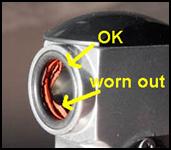 Die Bauanleitung
listet vier Möglichkeiten der Dämpfung, die durch unterschiedliche Kombination
von weicheren roten und härteren schwarzen Gummi-Dämpfungsringen realisiert
werden können. Für 3D-Fliegen empfiehlt sich die Verwendung der härtesten
Dämpfungsvariante (nur schwarze Ringe einsetzen), da die roten bereits im Laufe
weniger Flüge verschleißen.
Die Bauanleitung
listet vier Möglichkeiten der Dämpfung, die durch unterschiedliche Kombination
von weicheren roten und härteren schwarzen Gummi-Dämpfungsringen realisiert
werden können. Für 3D-Fliegen empfiehlt sich die Verwendung der härtesten
Dämpfungsvariante (nur schwarze Ringe einsetzen), da die roten bereits im Laufe
weniger Flüge verschleißen.
167) Three Dee MP-XL: Which rotor head
damping should I use?
The manual lists four damping possibilities which can be
realized by using different combinations of softer red and harder black rubber
O-rings. For 3D flying you should use the hardest version (black rings only) as
the red rings will wear out after several flights only.
166) Wieviel üben Sie am Simulator?
Wir fliegen seit Jahren keinen Simulator mehr. Für
manchen mag dies schwer zu glauben sein, aber unsere Zeit ist heute so knapp
bemessen, daß wir sie lieber für sinnvollere Dinge einsetzen oder draußen auf
dem Feld zubringen.
166) How much time
do you spend flying simulator?
We have not flown any simulator in years. This may sound
hard to believe for some of you, but time is so scarce these days we rather
spend it for more useful things or out in the field.
165) T14 MZ/FX-40:
Gibt es einen eingebauten Simulator?
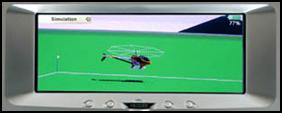 Nein, auch wenn dieses Gerücht
mittlerweile nicht mehr totzukriegen ist. Dies war ein Aprilscherz von Tobias
"2f2f" Wagner in ROTOR 04/2006 im Rahmen seines Testberichtes über
die robbe/Futaba FX-40. Bei den
Bildern handelt es sich um gute Fotomontagen, siehe auch unsere Bildsektion.
Nein, auch wenn dieses Gerücht
mittlerweile nicht mehr totzukriegen ist. Dies war ein Aprilscherz von Tobias
"2f2f" Wagner in ROTOR 04/2006 im Rahmen seines Testberichtes über
die robbe/Futaba FX-40. Bei den
Bildern handelt es sich um gute Fotomontagen, siehe auch unsere Bildsektion.
165) T14 MZ/FX-40: Is there a built-in
simulator available?
No, even though it seems impossible to stop the rumour by
now. This was an April-fool joke by Tobias "2f2f" Wagner in ROTOR 04/2006.
The pictures in his detailed review of the robbe/Futaba
FX-40 were photomontages; also see our picture section.
164) Gibt es einen internationalen Standard zur Bewertung
von 3D?
Der offizielle internationale Standard zur Bewertung von
3D Aerobatik-Flügen ist in der Klasse F3N der FAI (Weltluftsportverband)
definiert.
164) Is there an
international standard for judging 3D flying?
The official international standard for judging 3D aerobatic
flying is defined in the F3N category by FAI (World Air Sports Federation).
163) Was steckt wirklich hinter der Biene Maja-Idee?
Der Grundgedanke hinter Maja ist, eine gemeinsame Basis
für experimentelle und anspruchsvolle, aber dennoch unterhaltsame
R/C-Hubschrauber-Stunts zu schaffen. So gesehen drehen sich die Episoden nicht
um die Biene, vielmehr stellt die Biene das verbindende Element dar.
Das Konzept ist deshalb so großartig, weil es Kontinuität
in (die Geschichten rund um) etliche Stunts bringt, die ansonsten voneinander
unabhängige Aktionen wären. Obgleich Maja ein sehr charmanter Charakter ist,
sollte man sich nicht verleiten lassen, die wirklich aufwendige und exzellente
Arbeit aller Beteiligten zu übersehen und das ganze mit einem Kinderspiel zu
verwechseln.
163) What's the
real idea behind Maya The Bee?
The basic idea behind Maya is to have a common basis for both
experimental and demanding, yet entertaining R/C helicopter stunts. From this
point of view, the films are not about the bee, but the bee is the linking
element.
The concept is so great because it brings continuity into
(the stories around) a number of stunts which would otherwise be separated
actions. While Maya certainly is a charming character, it is important not to
overlook the excellent job that all people involved are doing and to mistake it
for some child's play.
162) Rechnet es sich für Sie, all die vielen Videos zu
produzieren?
Absolut, wir haben richtig viel Spaß dabei! J
(Aus finanzieller Sicht: Nein.)
162) Does it pay
for you to do all the free videos?
Yes, we have a hell of a lot of fun doing them! J
(From a financial point of view: Not at all.)
161) Wie oft werden Eure Videos heruntergeladen?
Dies hängt vom Video ab, und natürlich von der Zeit, seit
der es online ist. In der Regel sind etliche Tausend Downloads schnell
erreicht. In manchen Fällen verzeichnen Videos sogar mehrere 10.000 Zugriffe.
161) How often are
your videos downloaded?
This depends on the video and of course the time it is
online. Usually, several thousand downloads are reached quite fast. In some cases
it can be even several 10,000 downloads.
160) Welchen Sprit fliegen Sie?
Da wir keine Zeit und Lust haben, uns mit unnötigen
Motorproblemen herumzuschlagen, setzen wir seit langem auf den Weltmarktführer CoolPower
von Morgan Fuel, der
für konstante, verläßliche und bewährte Spritzusammensetzung weltweit steht.
Wir verwenden verschiedene Nitrierungsgrade von 5 - 30% (Tobias Wagner fliegt
30%).
160) What fuel do you fly?
Since we have no time to deal with unnecessary engine
problems, we have chosen to fly CoolPower
by Morgan Fuel, who is
the world leader in high quality model fuels. The fuel mixture is constant,
reliable and proven throughout the world. We use pretty much everything from 5
- 30% nitro (Tobias Wagner flies 30%).
159) Was ist die stilvollste Art, abzustürzen?
<Hah hah hah> Eine wirklich coole Frage. Und wie
Tobias Wagner es ausdrücken würde: Versuchen Sie, vor dem Einschlag noch ein
paar Pirouetten zu steuern – sofern Sie können! J
Etwas ernster betrachtet, hat man in vielen Fällen
natürlich keine wirkliche Wahl. Wenn der Heli übrigens kaputt ist, dann läßt
sich daran auch nichts mehr ändern; und solange Sie nicht in Sachen Wartung
gepfuscht haben oder besonders leichtsinnig geflogen sind, dann hilft es auch
nichts, den ganzen Tag über ein langes Gesicht zu ziehen. Um Sie ein wenig
aufzuheitern, hat Tobias Wagner die berühmte
Tabelle zur Crash-Klassifizierung ins Leben gerufen (ROTOR 04/2005), so daß
Sie Ihr "Event" zumindest mit Freunden teilen können. Denn wie heißt
es so schön: Geteiltes Leid ist halbes Leid. In diesem Sinne ...
159) What's the
most stylish way to crash?
<Hah hah hah> Very cool question, really. As Tobias
Wagner would say: Try to do a couple of pirouettes prior to the impact – if you
can! J
A little more seriously speaking, in many cases you won't have
much of a choice. And if it's broken, then that's what it is, so unless you
didn't maintain your heli or were especially careless during flying, it makes
no sense to pull a long face all day long. To cheer you up a little, Tobias
Wagner came up with his famous
crash classification table (ROTOR 04/2005) so you can at least share your
happening with others; and as they say: A sorrow shared is a sorrow halved. On
this note …
158) Was ist Ihre Haltung bezüglich Mikrohelis?
Wir mögen sie absolut! Dank der mittlerweile
"erwachsenen" Mikroheli-Technik sind die kleinen Geräte heutzutage
gut zu fliegen und gleichzeitig erschwinglich in Anschaffung und Betrieb. Dies
ist einer der Gründe, weshalb wir sie gerne für Stunts einsetzen; ein weiterer
ist, daß das Gefahrenpotential – obgleich Mikrohelis alles andere als Spielzeug
sind – im Vergleich zu größeren Helis doch merklich geringer ist.
Ergänzender
Kommentar: Wir haben wirklich Spaß an all unseren Aktionen, und
trotz guter Planung lassen sich Beschädigungen nicht immer vermeiden. Dies sagt
Ihnen, daß wir weder zaubern können, noch mit doppeltem Boden arbeiten; alles,
was Sie in unseren Filmen sehen, ist real. Dies ist das echte Leben, und es
dokumentiert auf eindrucksvolle Weise, wie wir alle dazulernen und in Folge
Änderungen vornehmen, um die gesteckten Ziele zu erreichen. Beachten Sie auch
den feinen Unterschied, der HeliGraphix von anderen unterscheidet: Unsere
Stunts sind immer in konstruktiver Art und Weise konzipiert, nie destruktiv!
158) What is your
attitude towards micro helicopters?
We do like them! Thanks to fully "grown up" micro
heli technology today, they are lots of fun to operate, and also quite
affordable. That's one reason why we use them for some of our R/C stunts.
Another one is that – despite the fact they are everything but a toy – the
danger level is significantly lower compared to bigger helis.
Additional
comment: We truly enjoy all the actions and stunts we are doing, and
despite of good planning damage cannot always be avoided. What this tells you
is that we are no magicians, and that everything you see in our videos is real
and we work without false bottom. This is the real life, and it documents the
interesting process of how we all learn and make subsequent changes in order to
achieve the set goals. Please also note the fine difference that sets
HeliGraphix apart from others: Our stunts are always set up in a constructive
way rather than a destructive one!
157) Werden Sie wirklich von all den Firmen in der Rubrik
'Links' unterstützt?
Wir arbeiten tatsächlich mit allen durch Banner
verlinkten Firmen, entweder allgemein oder beschränkt auf ein bestimmtes
Projekt (dann u.U. bereits abgeschlossen). Bitte beachten Sie, daß wir uns
aktiv für eine Zusammenarbeit entschieden haben, weil wir die Produkte und den
Service für sehr gut halten; daher können wir die genannten Firmen guten
Gewissens auch Ihnen als erste Wahl empfehlen!
(Siehe auch Frage #143)
157) Are you
really supported by all the companies listed in the 'Links' section?
We actually work or worked with all the companies linked
there with banners, either generally or restricted to a certain project. Please
note that we chose to work with them because we know they have excellent
products and good service; so with a safe conscience we can recommend them as
first choice also to you!
(Also see question #143)
156) Ihre Helis sehen immer brandneu aus – werden sie
regelmäßig ersetzt?
Nein, sie werden gewartet! Und eine sorgfältige Reinigung
nach jedem Flugtag ist Grundvoraussetzung für eine gründliche Inspektion. Und ja, dies gilt
auch für Elektromodelle!
156) Your helis
always look brand new – do you replace them regularly?
No, we maintain them! And a thorough cleaning after every
day's flying is a necessary prerequisite for a careful inspection. And yes,
this goes for electric models, too!
155) Wie schließe ich einen Hacker/FlightPower 12s LiPo-Pack
an zwei V-Balancer (FP-B6s) an?
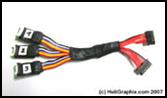 Diese
Frage ist berechtigt, da weder die Anleitung der Akkupacks noch der Balancer
hierzu Auskunft gibt. In unserer Download/Tools-Sektion
finden Sie einen entsprechenden Verdrahtungsplan
(ohne Gewähr).
Diese
Frage ist berechtigt, da weder die Anleitung der Akkupacks noch der Balancer
hierzu Auskunft gibt. In unserer Download/Tools-Sektion
finden Sie einen entsprechenden Verdrahtungsplan
(ohne Gewähr).
155) How do I
connect a Hacker/FlightPower 12s LiPo pack to two V-Balancers (FP-B6s)?
This question is justified as neither the instructions
coming with the battery pack nor with the balancer provide you with
information. Please have a look at our Download/Tools
section for a wiring
sketch (no responsibility is accepted for the correctness of this
information).
154) Three Dee MP-XL:
Welche Heckblätter für 3D-Fliegen?
Für die TD MP-XL-Familie
sind Heckrotorblätter mit ca. 105 mm Länge zu empfehlen (Standard sind 95 mm),
weil dann die Heckperformance (Auslenkverhalten und Drehrate) maximal wird.
Außer der Optik bieten CfK-Blätter in diesem Zusammenhang gegenüber Kunststoff
keinen großen Vorteil.
Achtung! Der
Einsatz von 105 mm Heckrotor-Blättern ist nur bei Verwendung von 700 mm
Hauptrotorblättern möglich. 710 mm-Versionen sind leider zu lang, hier kann es
zur Kollision von Haupt- und Heckrotor kommen.
Achtung! Sofern
Sie noch 3 anstatt 4 mm starke Blatthalteschrauben verwenden, kann der Einsatz
von CfK-Heckblättern zum Abriß von Blatthaltern führen (siehe Frage #138 für
weitere Infos).
154) Three Dee MP-XL: Which tail blades for
3D flying?
For the TD MP-XL
family we recommend using 105 mm tail blades (standard are 95 mm) as this will
maximize tail performance. Apart from the optics, Cfk blades don't have
significant advantages over plastic blades in this context.
Caution! Don't
use 105 mm blades in combination with 710 mm main blades as this may result in
a collision of main and tail rotor. Use 700 mm or shorter versions instead.
Caution! Only
use Cfk blades when using 4 mm screws for the blade holders (see question #138
for more details).
153) Besitzt Futaba PCM-G3 einen handfesten Vorteil
gegenüber PCM-1024?
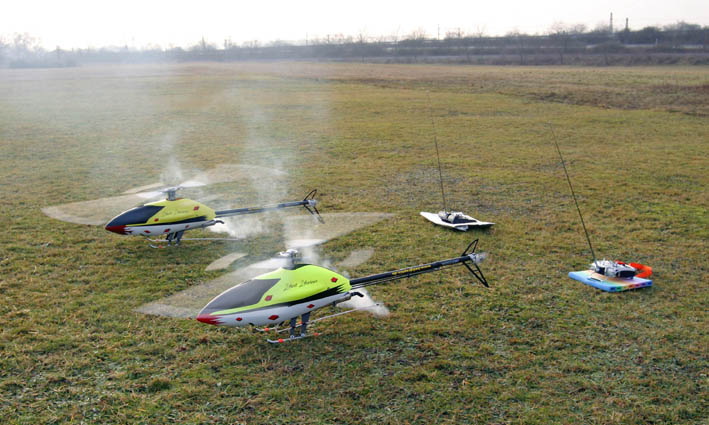 Das
aktuelle Übertragungssystem PCM-G3 von robbe/Futaba weist eine Reihe von
Pluspunkten auf: Mit 2048 Schritten eine sehr gute Auflösung, 12 + 2 Kanäle,
und schnelle Übertragung. Ein Nachteil des hohen Informationsflusses ist eine
gegenüber PCM-1024 stärkere Empfindlichkeit der Empfänger gegenüber
"Elektrosmog"; insbesondere im amerikanischen 72 MHz-Band wurde über
Probleme mit Störungen berichtet, aber auch hierzulande vor allem in Verbindung
mit leistungsstarken Elektromodellen.
Das
aktuelle Übertragungssystem PCM-G3 von robbe/Futaba weist eine Reihe von
Pluspunkten auf: Mit 2048 Schritten eine sehr gute Auflösung, 12 + 2 Kanäle,
und schnelle Übertragung. Ein Nachteil des hohen Informationsflusses ist eine
gegenüber PCM-1024 stärkere Empfindlichkeit der Empfänger gegenüber
"Elektrosmog"; insbesondere im amerikanischen 72 MHz-Band wurde über
Probleme mit Störungen berichtet, aber auch hierzulande vor allem in Verbindung
mit leistungsstarken Elektromodellen.
Für seinen sehr detaillierten Bericht in ROTOR 02/2006
hat Tobias "2f2f" Wagner PCM-G3 im direkten Vergleich zu PCM-1024
getestet (siehe Bild; zum Vergrößern
anklicken). Als Ergebnis zeigte sich, daß die Reaktionen des Helis mit
PCM-G3 tatsächlich etwas schneller waren, jedoch nicht in einem Ausmaß, wo man
generell signifikant profitieren würde. Darüber hinaus schlug er vor, einen
mathematisch gestützten Doppelblindtest mit all jenen Piloten durchzuführen,
die über einen deutlichen Unterschied berichten. Wie man Tobias kennt, wird er
keine Kosten und Mühen scheuen, diesen Test auch tatsächlich und akkurat mit
Ihnen durchzuführen; daher ist es ratsam, ihn nur dann zu kontaktieren, wenn
Sie sich Ihrer Sache wirklich sicher sind (und das mußte auch robbe/Futaba
einsehen). J
Nichtsdestoweniger haben wir mehrere FX-40 und T14 MZ im
Einsatz und sind sehr zufrieden damit! Alles in allem können wir die Sender und
PCM-G3 wärmstens empfehlen, nur das Argument der "Echtzeitsteuerung"
mag nicht das entscheidende sein.
153) Is there a
significant advantage of Futaba's PCM-G3 compared to PCM-1024?
Futaba's state of the art 2048 steps PCM-G3 transmission
does have a number of advantages: Very good resolution, 12 + 2 channels, and
fast transmission. A downside of the high information flow is that compared to
PCM-1024 the receivers are generally more sensitive to RF noise; especially in
the 72 MHz band and in combination with electric models, problems have been
reported.
For his ultra detailed report in ROTOR 02/2006 Tobias
"2f2f" Wagner did a "simultaneous" test of PCM-G3 and
PCM-1024 (see picture; click to enlarge);
the result was that the response of the heli with PCM-G3 is indeed a little bit
faster, but not to a degree where people would generally significantly benefit.
He further suggested to do a mathematically backed double blind test with all
those pilots who claim they perceive a real difference. As we know Tobias, he
will spare no pains to actually do the test with you in his accurate manner, so
it's best to only contact him if you are positive about your abilities (even
robbe/Futaba had to learn this). J
Having said all of this, we are using several FX-40 and T14
MZ and are very happy with them! So all in all, we can warmly recommend the
transmitters and PCM-G3, it's just that the "realtime transmission"
argument may not be the decisive one.
152) Three Dee NT:
Was ist die Lebensdauer der Antriebsriemen?
Sowohl Haupt- als auch Heckriemen scheinen keinem
nennenswerten Verschleiß zu unterliegen, der ein regelmäßiges Austauschen
erforderlich macht. Wichtig ist, daß alle Komponenten des Antriebsstranges
sauber zueinander ausgerichtet sind; ungleiche Belastung eines Riemens (obere
vs. untere Kante) führt zu Verschleiß und kann auf Dauer zum Abriß führen. Anzeichen hierfür
sind ausgefranste Ränder sowie asymmetrische Abriebspuren.
152) Three Dee NT: What's the lifetime of the
drive belts?
Both the main and tail drive belt usually do not need
maintenance or replacement unless damaged in a crash. It is important, though,
that all components of the drive train are properly aligned; an uneven load
distribution (upper vs. lower edge) means wear and will eventually cause the
belt to tear. Indications of this are frayed edges and asymmetrical signs of
abrasion.
151) Einlaufprozedur: Mit welchem Sprit soll man Heli-Motore
einlaufen lassen?
Es hält sich hartnäckig das Märchen, Rizinus sei ein
besseres Schmiermittel als gutes Synthetiköl. Das ist falsch, und bei den guten
Passungen der heutigen Motore empfiehlt es sich, den neuen Motor im Heli und
mit dem Sprit einlaufen zu lassen, mit dem er später betrieben werden soll.
Verfährt man anderweitig, kann das später zu schlechter Laufkultur oder/und
Leistungseinbußen führen.
Betreiben Sie den Motor während der ersten beiden Tanks
merklich fett; der Heli sollte jedoch noch in der Lage sein, abzuheben. Die
ersten beiden Tanks sollten nur kurze Schwebepassagen mit anschließenden
Abkühlpausen von 30 Sekunden enthalten. Danach schließen sich zwei Tanks
normaler Rundflug (am besten ohne Haube für bessere Kühlung) mit Lastwechseln
(öfter zwischenlanden) und nur kurzen Vollgaspassagen an. Sechs weitere Tanks
ohne exzessives 3D runden den Einlaufvorgang ab. Wichtig beim Einlaufen ist,
daß der Motor nicht permanent bei einer Drehzahl tuckert, sondern
Drehzahl-/Lastwechsel erfährt.
Tip: Messen
Sie nicht ständig Ihre Motortemperatur, sondern gehen Sie fliegen! J
151) Break-in
procedure: Which fuel should I use to break in helicopter engines?
There is still the fairytale that castor oil is a better lubricant
than good synthetic oil. This is wrong, and given the very low tolerances of
all components in modern engines, it is best to break in the new engine in the
heli and with the fuel you want to fly it with later on. Other break-in
procedures may result in rough performance or/and decreased power.
Keep the mixture rich for the first two tanks, but lean
enough so the heli is still able to lift off. During the first two tanks, only
hover for short periods and subsequently allow the engine to cool down for 30
seconds. Next are two tanks of normal flying (best would be without canopy for
better cooling) with load changes and only short full throttle passages; land
from time to time and allow the engine to cool down a little. Six more tanks
without excessive 3D will round off the break-in process. It is generally
important to have frequent load changes rather than operating the engine at a
constant RPM.
Tip: Don't
check your engine temperature all the time but go fly instead! J